top of page

Lev Aharon Library
All Publications

Switching Din to Rachamim
The Duality of Rosh Hashanah and Yom Kippur Hashem created the world with the midas haRachamim (attribute of mercy)¹. The Thirteen Attributes of Mercy begin with the words “Kel Rachum v'chanun…”². Yes, Hashem is Kel—a God of judgment—but compassionate and gracious mercy. We merit His mercy by showing mercy to others, as it says: “Kol hamerachem al habriyos, merachem alav min hashamayim”—whoever has mercy on Hashem’s creations will receive mercy from Heaven³. The Midrash teaches that when Bnei Yisrael blows the shofar, Hashem sits on His throne of mercy, filled with compassion, and He turns judgment into mercy⁴. This is Rosh Hashanah—Din b'Rachamim (judgment with mercy). In contrast, Yom Kippur is Rachamim BaDin (mercy within judgment)⁵. While on Rosh Hashanah, Hashem’s mercy transforms judgment, Yom Kippur is a day of complete mercy. It doesn’t need to be invoked; rather, it naturally comes with Yom Kippur. This can be seen in the words of mussaf Hayom Haras Olam "Im k'banim, rachmeinu k'rachem av al banim. V’im k'avadim…ad she’tichaneinu…”⁶— Rosh Hashanah is about "Melech," while Yom Kippur is about "Av" (father), and a father naturally has compassion for his child. Whether as children, or as servants; if as children, have compassion on us as a father has compassion on his children! If as servants, our eyes are fixed on You until You favor us, and bring forth our judgment as the light, Revered and Holy One! (mussaf Rosh Hashanah) There is a classic Gemara that parallels Yom Kippur: Hashem invites Rabbi Yishmael into His innermost chambers and says, “Yishmael my son, bless Me”⁸. The avodah of Yom Kippur is lifnei u'lifnim—the innermost service. On this day, the Kohen Gadol is granted entry into the innermost chamber of Hashem—the Kodesh HaKodashim. Only Hashem’s children are allowed into His innermost chambers; even the angels are forbidden from entering the Kodesh HaKodashim¹⁰. Our relationship with Hashem on Yom Kippur is unique. It is a time when all He wants from us is to arouse His compassion. Rabbi Yishmael understood this and blessed Hashem: “Sheyigolu rachamecha al ka’ascha”—may Your mercy take precedence over all other attributes¹¹. Just as a father refuses to believe a negative report about his child, on Yom Kippur, Hashem does not wish to see the faults of His nation. On Yom Kippur, He is only our Father. How Can Hashem Be Dan L'kaf Z'chut? In a discussion with Rav Reuven Feinstein shlit"a, he related to me a question that he once posed to his father, the great Rosh Yeshiva, Hagaon Rav Moshe Feinstein zt”l. He asked, how can we understand the concept that Hashem is dan l'kaf z'chut? As mere mortals, we do not know the full picture. When we see someone seemingly doing something wrong, we can assume that there may be reasons beyond our limited understanding. But the Ribono Shel Olam knows every minute detail of each person’s actions. How can we ask Him to judge us favorably? One answer is that we are asking Hashem to look into the underlying reasons for our sins. Yes, we have wronged Him, but it is due to the pain and hardship we face. Were it not for the suffering and trials of this long exile, we would not have strayed so far. No one understands this better than Hashem. This is what we mean when we say that He is dan l'kaf z'chut. However, the Rosh Yeshiva, in his classic manner of simplicity and depth, answered: “Es is a gutte kasha, uber der Eibershter ken es tan.” It’s a good question, but Hashem can do it. The mercy of Hashem on His children on Yom Kippur doesn’t add up. But when it’s your child, it doesn’t have to. You can know that your child is completely wrong, and still, you will try to find him excuses. He is your child, after all. Sources: Midrash Rabbah on Bereishis 12:15 Shemos 34:6-7. Talmud Bavli, Shabbat 151b. Pesikta Rabbati 40. Machzor for Yom Kippur, "Unesaneh Tokef". Talmud Bavli, Berakhot 7a. Talmud Yerushalmi, Yoma 5:2. Talmud Bavli, Berakhot 7a.
Oct 11, 2024

The Greatest Segulah - Amen Yehei Shmei Rabbah
Amen Yehei Shmei Rabbah In our difficult times, with all the suffering people endure and the nisyonos we face, we are in desperate need of Hashem’s rachamim. One tremendous segula that has great power to draw rachamim upon us is answering "amen yehei shmei rabbah" with all our might, as taught in the Gemara (Brachos 3a). People are always searching for segulos. This one is clear and straightforward—an authentic segula. The Zohar HaKadosh teaches that the most effective way to arouse Heavenly mercy is by reciting the words "amen yehei shmei rabbah". We, as Yidden, have the ability to move Hashem, so to speak. We are shown how to awaken His mercy. The Creation of the World Here is a question many have pondered at some point in their lives: Why? Why did Hashem create the world? What does He gain from its creation? The Ramban teaches that the purpose of Creation is for Klal Yisrael to praise Hashem. Which praise made the world worth creating? The Raishis Chochma brings down the phrase “b'rov am hadras Melech.” Rosh Hashana focuses on malchus—Hashem’s Kingship. Often, after a group of people gather for a shiur, someone will recite Kaddish. The Gemara records in the name of R’ Yishmael that at that moment, Hashem gathers His malachim and says: "See My world! I created all of this. Why? Because they praise Me with the words 'amen yehei shmei rabbah'." This "amen yehei shmei rabbah", following a gathering of Yidden to hear words of Torah, is the most incredible honor we can give to Hashem. Sources Amen Yehei Shmei Rabbah as a Segula for Rachamim: Gemara, Berachos 3a: The Gemara discusses the power of answering amen yehei shmei rabbah with full intent and force, saying that one who does so can annul even harsh decrees. Zohar HaKadosh (Parshas Noach, 63b): The Zohar teaches that answering amen yehei shmei rabbah arouses Divine mercy (rachamim), being a powerful way to awaken compassion from the heavens. Purpose of Creation: Praising Hashem: Ramban, Commentary on Shemos 13:16: The Ramban explains that the purpose of Creation is that Klal Yisrael should come to praise Hashem and acknowledge His greatness. B'rov Am Hadras Melech: Raishis Chochma (Shaar HaYirah, Chapter 3): This work emphasizes the concept of "b'rov am hadras Melech"—in the presence of many, the King's honor is magnified—and connects this idea to communal prayer and the sanctification of Hashem’s name. Hashem Gathers His Malachim to Hear Amen Yehei Shmei Rabbah: Gemara, Berachos 57a: The Gemara states that Hashem gathers His malachim when He hears Klal Yisrael saying amen yehei shmei rabbah, and He takes pride in their praise. Tosafos on Berachos 3a: Tosafos expand on the special connection between Kaddish, communal Torah study, and the recitation of amen yehei shmei rabbah as moments of extraordinary Divine favor.
Oct 7, 2024
Yom Kippur
Yom Kippur- Judgment and Mercy
The Essence of Yom Kippur Let us delve into the significance of Yom Kippur and explore the essence of this sacred day. Every Jew harbors a connection to Yom Kippur. The Sefarim refer to the ten days between Rosh Hashanah and Yom Kippur as the "Aseres Yemei Teshuvah," calling them "Yemei HaRachamim veHaRatzon" (Days of Mercy and Favor). Indeed, rachamim is a central theme of the Yamim Noraim. To deepen our understanding of this period, let us examine the concept of rachamim and the significance of these holy days. A Yom Kippur Jew We begin with the words of the Ramban in his commentary on the Torah, where he articulates the essence of these days with remarkable clarity: Rosh Hashanah represents "din b'rachamim" (judgment tempered with mercy), while Yom Kippur embodies "rachamim b'din" (mercy within judgment). The depth of this distinction is profound, and many commentators explore its meaning extensively. In keeping with our method of seeking a heartfelt understanding, we will aim to explain this distinction in a manner that speaks directly to the heart, guiding us in our preparation for the avodah of Yom Kippur. As noted, Jews worldwide—even those distant from religious observance—feel connected to Yom Kippur. The term "a Yom Kippur Jew" is often used with a negative connotation, implying someone whose sole connection to Judaism is Yom Kippur. However, we prefer to focus on the positive. This expression reflects the deep bond that Jews feel with this holy day, demonstrating that Yom Kippur and the Jewish soul are intertwined. "Avi" – My Father, A Symbol of Mercy To further our understanding of the rachamim of Rosh Hashanah and Yom Kippur, let us first consider Rosh Hashanah. A central theme of Rosh Hashanah is the Akeidas Yitzchak. The Midrash offers a fascinating insight into this episode, highlighting how Yitzchak repeatedly calls out to his father, Avraham, with the word "Avi!"—"my father!" The Midrash questions why Yitzchak needed to address Avraham as his father, something seemingly obvious from the context. It answers that Yitzchak sought to arouse his father's compassion through this plea, seeking to "touch a chord" of rachamim within him. The Akeida and the Expression of Love The question arises: What was Yitzchak trying to achieve by appealing to his father's mercy? It is unlikely that he was attempting to dissuade Avraham from fulfilling the divine command, as it would be inconceivable for Avraham to defy Hashem's direct order. Yitzchak undoubtedly understood this as well. So what was his intention? The Brisker Rav offers a profound insight. When Hashem commanded Avraham to offer Yitzchak as a korban, He specifically stated: "kach na et bincha… asher ahavta"—"take your son… whom you love." Hashem wanted Avraham to sacrifice Yitzchak, his beloved son, with full awareness of his love for him. The Brisker Rav explains that Yitzchak knew Avraham would have to suppress his natural paternal love to fulfill this command. However, Yitzchak wanted Avraham to feel that love intensely, ensuring that the act fully reflects the divine command to offer "the son whom you love." By calling out "Avi!," Yitzchak sought to evoke Avraham’s fatherly love, thereby ensuring that the sacrifice would be performed with complete devotion and love. A Deeper Understanding: Mercy for Future Generations Perhaps we can offer an additional explanation, one that is both emotionally stirring and profound. Yitzchak’s intention in appealing to his father’s mercy may have been to establish a precedent for future generations of Israel, invoking the concept of "m'orer rachamei ha'av al habanim"—arousing the father’s mercy for his children. The Midrash recounts that as Avraham prepared to sacrifice Yitzchak, "zolgu einav dima'ot"—tears flowed from his eyes. This indicates that Avraham, too, was engaged in laying the foundation of the Akeida as an eternal source of merit, invoking Hashem’s compassion on His beloved nation, Israel. This may explain why, throughout the narrative of the Akeida, until the moment Avraham is commanded to refrain from the act, the Torah uses the name "Elokim," representing the attribute of strict justice (midas hadin). Only after Avraham is stopped by the angel does the Torah employ the name "Hashem," representing the attribute of mercy (midas harachamim), as it is written: "וַיִּקְרָ֨א אֵלָ֜יו מַלְאַ֤ךְ ה' מִן־הַשָּׁמַ֔יִם...". This highlights the transformative power of the Akeida to turn strict judgment into mercy. The Akeida Is Rachamaim Not Din Similarly, the bracha of shofaros that we recite on Rosh Hashana concludes with the words: "שומע קול תרועת עמו ישראל ברחמים"— "Who listens to the sound of the teru'ah of His people Israel with mercy." The sound of the shofar, symbolizing the ram used by Avraham Avinu at the akeida, has the capacity to invoke rachamim from Hashem upon us. On a deeper level, we pray in the bracha of zichronos: "ועקדת יצחק לזרעו היום ברחמים תזכור"— "May You remember the akeida of Yitzchak on behalf of his descendants with mercy, today!" What is the significance of the emphasis on "today"? The Shelah offers an extraordinary insight: While the akeida indeed serves as a powerful source of defense, invoking rachamim for Klal Yisrael, it could also, potentially, bring about a din aspect. The akeida demonstrates the immense spiritual stature of the avos hakedoshim, which may highlight how distant we are from their level of devotion, their ahavas Hashem, and their willingness to sacrifice entirely for His sake. Therefore, on Rosh Hashana, we plead with Hashem: "Today," focus only on the rachamim aspect of the akeida, not the din. sources: Yom Kippur and Aseret Yemei Teshuvah: Source for the term "Aseret Yemei Teshuvah" (Ten Days of Repentance): Mishnah Yoma 8:8: Describes the process of atonement on Yom Kippur and the special nature of the ten days between Rosh Hashanah and Yom Kippur. Rambam, Hilchot Teshuvah 2:6: Discusses the unique role of these ten days as a time when repentance is more readily accepted. Rosh Hashanah as "Din b'Rachamim" and Yom Kippur as "Rachamim b'Din": Source for Ramban’s commentary: Ramban, Commentary on the Torah, Vayikra 23:24: Ramban explains the difference between Rosh Hashanah, which is a day of judgment tempered by mercy, and Yom Kippur, which is primarily mercy but within the context of judgment. Additional Mefarshim: See Sefas Emet, Rosh Hashanah 5659 for a deeper analysis of these terms. The Concept of a "Yom Kippur Jew": Akeidat Yitzchak and "Avi" in the Midrash: Source for the Midrash: Midrash Rabbah, Bereishit 56:6: Explains Yitzchak’s repeated call to Avraham as an attempt to evoke his father's mercy during the Akeida. The Brisker Rav’s Interpretation of the Akeida: Source for the Brisker Rav’s explanation: Haggadat Shel Pesach, Chiddushei HaGriz (Brisker Rav): Discusses the idea that Avraham was commanded to bring Yitzchak as a sacrifice with love, as referenced in the verse “asher ahavta.” Rav Chaim Soloveitchik, Chiddushei HaGriz al HaTorah, Bereishit 22. Tears of Avraham (Zolgu Einav Dima’ot): Source for the Midrash: Midrash Rabbah, Vayikra 29:9: Describes Avraham’s emotional state during the Akeida, including his tears as a sign of his deep compassion, while still fulfilling the divine command. The Shift from "Elokim" to "Hashem": Source for the name change in the Akeida: Bereishit 22:1–13: The narrative itself presents the use of "Elokim" in the context of strict justice until the intervention of the angel, where the name "Hashem" is used, indicating mercy. Rabbeinu Bachya, Commentary on Bereishit 22:12: Discusses the significance of this shift from midat hadin (judgment) to midat harachamim (mercy). Bracha of Shofaros: The phrase "שומע קול תרועת עמו ישראל ברחמים" is found in the Shofaros section of the Musaf prayer on Rosh Hashana. The connection between the sound of the shofar and invoking mercy relates to various Midrashic and halachic sources that associate the shofar with the ram of the akeida. One source is the Gemara in Rosh Hashana 16a, which discusses the shofar of Rosh Hashana as an instrument for arousing Divine mercy (rachamim). Bracha of Zichronos and the phrase "ועקדת יצחק לזרעו היום ברחמים תזכור": This is part of the Zichronos section of the Musaf on Rosh Hashana, which appeals to Hashem to remember the merits of the akeida. The phrase can be found in traditional Machzorim (High Holiday prayer books). The emphasis on “today” is explained in many commentaries. Shelah’s Insight: The idea that the akeida has a dual potential of invoking both rachamim and din comes from the Shelah HaKadosh (Shnei Luchot HaBrit, Rosh Hashana, Ner Mitzvah). The Shelah explains that the greatness of the avos can, at times, serve as a stark contrast to the shortcomings of their descendants, which could lead to a harsher judgment (din). This is why we plead for the focus to remain on the rachamim aspect.
Oct 7, 2024

Content in this world Content in Heaven
The term "Noach" derives from the Hebrew word "menucha," a state of rest. This state of rest emanates from a sense of satisfaction or contentment. Noach exemplified this trait of contentment and, thus, he lived a contented life. Consequently, we can interpret the statement made in Tosfos (Daas Zekeinim) previously mentioned, "Noach L'elyonim Ve'noach Le'tachtonim": Noach was at peace with the world to come (elyonim), that is, Gan Eden, because he was at peace and content in this world (tachtonim). Simply stated, his award is deserved in the World to Come for being content and happy in this world. In the pursuit of success and the realization of personal goals, one may find themselves engaging in hostile behavior towards their friends, family, and acquaintances. This behavior is viewed as a grave transgression in the eyes of God. However, it is unlikely that the same individual would engage in such behavior if they were experiencing a sense of ease and contentment. The key to achieving this sense of tranquility lies in the acceptance that God is the ultimate force behind all that occurs in one's surroundings. By developing a deep understanding and appreciation of this fact, individuals can find solace in the knowledge that God oversees all aspects of their lives. Moreover, by cultivating a keen sense of faith in God, the spiritual essence, and embracing their weakness, the physical embodiment, individuals can avoid succumbing to the temptation of sin. Ultimately, by leading a life guided by these principles, one can achieve both spiritual and physical peace, thereby securing their place in Gan Eden and experiencing contentment in this world and the world to come. Content in this world Content in Heaven
Oct 20, 2023
Noach
Content = Living With God
ACCORDING TO THE INTERPRETATION PROVIDED BY Targum Onkeles, the term "Tzadik Tomim" identifies Noach as a completely righteous person. אלין תולדת נח נח גבר זכאי שלים הוה בדרוהי בדחלתא דיי הליך נח: These are the progeny of Noach. Noach was a complete righteous man in his generations; Noach walked with reverence of God. However, it should be noted that the cantillation marks (trop) separate the words "tzadik" and "tomim," suggesting that Noach was both righteous and complete, and in truth, they are fundamentally different from one another. Therefore, insight can be drawn from another instance of the term "Tomim," that which is noted in Parashas Shoftim (Deuteronomy 18:13). תמים תהיה עם יהוה אלהיך: You must be wholehearted with Hashem your God. Rashi offers an alternative interpretation of the term "Tomim" in the context of that verse. According to Rashi, "Tomim" is defined as walking with God and not investigating the future. תמים תהיה עם ה' אלהיך. התהלך עמו בתמימות, ותצפה לו, ולא תחקר אחר העתידות, אלא כל מה שיבא עליך קבל בתמימות ואז תהיה עמו ולחלקו: Walk before him whole-heartedly, put your hope in Him and do not attempt to investigate the future, but whatever it may be that comes upon you accept it whole-heartedly, and then you shall be with Him and become His portion (Sifrei Devarim 173:3). Considering Rashi's exposition, one may understand "Tomim" as an attribute of contentment, living in the present moment. A state of contentment, indicative of happiness, directly results from a close relationship with God and trusting in His plan. Conversely, those who omit God from their lives tend to search and probe the future restlessly, attempting to control their destiny, when in reality, all is determined by God. In life, the person who is "Tomim," - complete in their relationship with God and has faith that He will provide for them - will experience contentment. This was the defining trait of Noach, who was "Tomim" with God and entrusted that He would safeguard and care for him. Moreover, Noach is also referred to as righteous, a term that denotes an individual who lives with a constant awareness of God's presence. The excellence of Noach lies in his state of contentment, which found favor in God's eyes. Content = Living With God
Oct 20, 2023
Noach
Why Noach Found Favor in God's Eyes
THE TORAH (GENESIS 6:7-8) CONVEYS THE NOTION THAT God chose to spare the world from annihilation because of Noach's favor in His eyes. The verse reads as follows: ויאמר יהוה אמחה את־האדם אשר־בראתי מעל פני האדמה מאדם עד־בהמה עד־רמש ועד־עוף השמים כי נחמתי כי עשיתם: ונח מצא חן בעיני יהוה: Hashem said, I will obliterate mankind which I have created from the face of the earth, from man to beast, to the creeping things and to the birds of heaven, for I regret that I made them. However, Noach found favor in the eyes of Hashem. Here, Noach is described as possessing the attribute of favor, and it is noteworthy that God found favor in him. It is important to consider the significance of Noach's possession of the attribute of favor and why God found favor in him. This can be explained with two explanations. One interpretation is that Noach's righteousness was not merely a result of his adherence to God’s commandments but a manifestation of his innate goodness and sincerity. That is, he was righteous in his character traits - Middos. Another answer is that Noach's completeness may have been seen as a result of his ability to balance his spiritual and physical needs. Rather than being consumed by either extreme, Noach maintained a sense of equilibrium and harmony between his physical and spiritual selves. This balance contributed to his ability to find favor in the eyes of God
Oct 20, 2023
Noach
Seek What Is Missing
AS EXPOUNDED IN THE TORAH (GENESIS 2:21-23), God created the female form from the male's rib. The verse reads: ויפל יהוה אלהים תרדמה על־האדם ויישן ויקח אחת מצלעתיו ויסגר בשר תחתנה: ויבן יהוה אלהים את־הצלע אשר־לקח מן־האדם לאשה ויבאה אל־האדם: ויאמר האדם זאת הפעם עצם מעצמי ובשר מבשרי לזאת יקרא אשה כי מאיש לקחה־זאת : (21) And Hashem, God caused a deep sleep to fall upon the man, and he slept: and He took one of his sides, and closed the flesh in its place, (22) and of the side, which Hashem, God had taken from the man, He made a woman, and brought her to the man. (23) And the man said, This is now bone of my bones and flesh of my flesh: she shall be called Woman, because she was taken out of Man. One rationale behind God's choice to use the male's rib to create the female form follows the previously said reason that it is to instill a sense of deficiency or incompleteness in the male, propelling him to seek what is absent. This innate human impulse to search for what is missing is typically triggered when one recognizes a deficiency. As an example, this phenomenon is illustrated in the Torah portion, where the Torah (Genesis 2:5) asserts that no rain fell on the earth prior to man’s prayer; thus, one must recognize that something is absent in order to acquire it. וכל שיח השדה טרם יהיה בארץ וכל־עשב השדה טרם יצמח כי לא המטיר יהוה אלהים על־הארץ ואדם אין לעבד את־האדמה: And no plant of the field was yet in the earth, and no herb of the field had yet grown, for Hashem, God had not caused it to rain upon the earth, and there was not a man to till the ground. Rashi (ibid) asserts that God intended for man to beseech Him for rainfall: כי לא המטיר: ומ"ט לא המטיר? לפי שאדם אין לעבד את האדמה, ואין מכיר בטובתם של גשמים, וכשבא אדם וידע שהם צרך לעולם, התפלל עליהם וירדו וצמחו האילנות והדשאים:
BECAUSE GOD HAD NOT CAUSED IT TO RAIN — And why has God not caused it to rain? Because there was no man to till the ground, and there was, therefore, no one to recognize the utility of rain. When Adam came (was created), however, and he realized that it was necessary for the world, he prayed for it, and it fell so that trees and vegetation sprang forth. If all our needs are effortlessly met, we will lose motivation to pursue further goals and desires, and our inclination to pray to God may decrease. It is essential to recognize that our achievements are not solely the result of our own efforts but are orchestrated by God's will, which governs the universe and our existence by taking into account everything from the grand scheme down to the most minor detail. This concept, known as Yahadus, underscores the significance of recognizing and submitting to the Divine authority of God.
Oct 13, 2023
Parasha
Hakaras Hatov for Your Wife
When God created man, the female form was not immediately created. In turn, God extracted a rib from Adam's body and created a spouse for him. God created the female, as the Torah (Genesis 2:18) states: ויאמר יהוה אלהים לא־טוב היות האדם לבדו אעשה־לו עזר כנגדו: And Hashem, God said, "It is not good for man to be alone; I will make a fitting counterpart for him." This verse prompts several questions. Why does the Torah expound on the motive behind God's creation of the female? The Torah only contains information from which we must learn and glean knowledge. Following this, what becomes the lesson, or why must we know this information Considering that the Torah emphasizes the necessity of the female form in the world's inception, why did God not create Chava in conjunction with Adam initially? It seems as if God did not produce a perfect creation, but rather, in the process of creating the universe, made an error ch''v. Of course, this cannot be true, so let us take a closer look at this. The rationale behind this is relatively straightforward. It is God's will for individuals to comprehend that it is not appropriate for a man to be without a wife. Thus, God initially created man without a spouse and subsequently bestowed upon him a wife, allowing him to perceive the inherent goodness of her in stark contrast. By acquiring a wife, man is now equipped with the necessary insight to appreciate her value fully. Consequently, given his knowledge of the challenges and shortcomings of living without her, he is unlikely to devalue her.
Oct 13, 2023
Parasha

New Perspective to Emunah
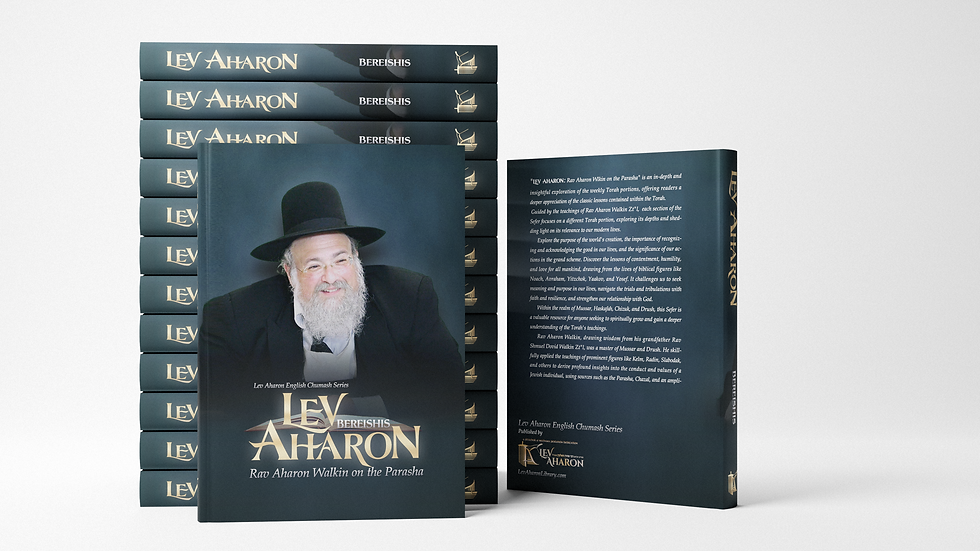
In the name of the Beis Aharon, Maran HaRav Aharon Walkin zt"l, I heard from my father that there is a different approach to Emunah - believing in God. This belief comes from the fact that it is written in the Holy Torah, "I am Hashem your God" (Exodus 20:2). As Jews who received the Torah and were at Har Sinai, we believe in everything that is written in it, without any doubts. We believe that the Holy Torah and everything in it is an absolute reality. Furthermore, the Jewish people are Am Hatorah - "people of the Torah." Accordingly, Jews must compare their thinking with the Torah and only consider what is written in it accurate. No other ideas or realities are valid for us. In other words, our belief in God is not just a matter of faith or knowledge but a din -a ruling. We are obligated to accept and believe that there is a Creator and Ruler of the world based on the Torah, which declares, "I am Hashem your God." Content in this post is a rough translation from Sefer Lev Aharon - Bereshis - Page 6
Apr 21, 2023
HASHKAFA
The Study of the World and Its Science
The Study of Creation, The Study of Science, Recognizing the Beauty of God The study of Creation, in all its order, system, and details, is not a matter of theology and philosophy alone. Researching the processes and workings of the universe is a science and wisdom like all other sciences. However, through this study, one can recognize God, whose seal is evident in every aspect of Creation. By studying the universe and everything within it, we can understand [the greatness of God by which it is stated] "He who spoke and the world came into being." Accordingly, King David said (Psalms 19:2), "The heavens declare the glory of God; the skies proclaim the work of His hands." The body of Creation proclaims and displays the Creator, to the extent that the heavens themselves declare, for those willing to listen and see the glory and splendor of God. Through studying the Creation that surrounds us, one can recognize and learn about the greatness of the Almighty Creator and His wonders. Similarly, King David said (Psalm. 35:10), "All my bones shall say, 'O Hashem, who is like You?'" It follows that King David drew lessons and knowledge from his anatomy and its function, thereby learning how they operate and function according to the words of the Creator, the One who gives them life. "O Hashem, who is like You?..." That in every created thing, we can explore and learn about the reality of the Blessed Creator. Therefore, we find in the Seder Maaseh Bereshit (the sequence of the creation story) that its details and nuances are discussed. As a source for our discussion, we should mention the words of the Maharal of Prague, who wrote in his work Nesiv HaTorah (Chapter 14), that for everything necessary to understand within the framework of the world, a person must learn and is obligated to do so, for everything is the work of God. We must understand them to recognize our Creator. Therefore, contemplating the essence of the world does not mean investigating the reality of God but instead studying the beauty and wonders of Creation, and this implies that there is an obligation to examine the order of Creation, such as as the Maharal stated, "for everything is a work of God," and this is as we have said, that through this one can recognize his Creator." The Content in this post is a rough translation from Lev Aharon Sefer Berieishs
Apr 21, 2023
HASHKAFA

Pharaoh's Sins as a Lesson in Repentance
Parashas Bo The Rambam discusses the idea that a person who commits a great sin or many sins may not be allowed the chance to repent and be forgiven. This is because they have willfully and consciously committed these sins, and their repentance- "Teshuvah" is held back. A person may commit a great sin or many sins causing the judgment rendered before the True Judge to be that the retribution [administered to] this transgressor for these sins which he willfully and consciously committed is that his Teshuvah will be held back. He will not be allowed the chance to repent from his wickedness so that he will die and be wiped out because of the sin he committed. This is implied by the Holy One, blessed be He's statement [related] by Isaiah [6:10]: “Make the heart of this people fat [and make their ears heavy. Smear over their eyes, lest they see with their eyes... understand with their hearts, repent and be healed].” Similarly, [II Chronicles 36:16] states “ They mocked the messengers of God, scorned His words, scoffed at His prophets until the anger of God mounted up against His people until there was no remedy.” Implied [by these verses] is that they willingly sinned, multiplying their iniquity until it was obliged to hold back their Teshuvah, [which is referred to as] the "remedy." For these reasons, it is written in the Torah [Exodus 14:4], "I will harden Pharaoh's heart." Since, he began to sin on his own initiative and caused hardships to the Israelites who dwelled in his land as [Exodus 1:10] states: "Come, let us deal wisely with them," judgment obligated that he be prevented from repenting so that he would suffer retribution. Therefore, The Holy One, blessed be He, hardened his heart. Why did [God] send Moses to [Pharaoh], telling him: “Send [forth the people], repent”? The Holy One, blessed be He, had already told Moses that he would not release [the people], as [Exodus 9:30] states: “I realize that you and your subjects [still do not fear God].” [The reason is stated in Exodus 9:16:] “For this alone, I have preserved you… so that My name will be spoken about throughout the earth],” i.e., to make known to all the inhabitants of the world that when the Holy One, blessed be He, withholds repentance from a sinner, he cannot repent, but he will die in the wickedness that he initially committed willfully. It can be learned from the Rambam that the purpose of Pharaoh's sins, forewarnings, and hardening of heart amounted to inform and teach mankind the laws of repentance and their principles. As a result, we are obligated to delve into this matter to understand the knowledge God sought to inform us. To understand the meaning of this verse(Exodus 10:1), we must examine its language: ויאמר יהוה אל־משה בא אל־פרעה כי־אני הכבדתי את־לבו ואת־לב עבדיו למען שתי אתתי אלה בקרבו Hashem said to Moshe, “come to Pharaoh for I have hardened his heart and [also] the hearts of his servants, so that I will be able to set [perform] these [miraculous] signs in their midst. Why was 'I' added, and what would have happened if it was written 'Come to Pharaoh, for he hardened his heart?' Consequently, we can conclude, considering what we have said before, that the whole issue of repentance, In which we are brought up and taught, is not attributed to logic and reason, but rather it is an ordinance from God. Similarly, reference may be made to the well-known Talmudic teaching (Yerushalmi Makhot 2 halacha 6), When they asked "wisdom," what is the punishment for a sinner, they said to them: "Sinners will be pursued by evil" (Proverbs 13:21). When they asked "prophecy," what is the punishment for a sinner, it said to them: "The soul that sins shall die" (Ezekiel 18:4). And when they asked the Holy One, blessed be He, what is the punishment for a sinner, He said to them: They should do repentance and be forgiven. In other words, according to the reasoning of "wisdom" and the ways of "prophecy," there is no room for rectifying sin and repentance, and when a man sins, he is sentenced to eternal punishment. Nevertheless, ultimately God, in His great kindness, deviates from the line of justice as it appears in the words of "wisdom" and "prophecy" by offering the sinner a pathway to repentance. In light of this, it follows, now that we have reached this principle, that even man's lack of repentance, caused by hardened hearts and difficulties, is not caused by any individual but by God Himself since He is the one who gave this gift of repentance, outside of the line of justice and only He can take it away when he sees fit. As the Talmud stated (kesubos 16a), "The mouth that prohibited can permit." Accordingly, it can be argued that this is why the phrase is said, 'because I have hardened his heart' - 'I' is precise, that without God, there is no power and authority in anyone's hand to do this. (Indeed, in the course of our discussion, we will further explain the need for this verse.)
Jan 23, 2023
Parashas Bo

The Lack of Recognition of Goodness: Pharaoh's Punishment for not Knowing Yosef
Ungratefulness: The Result of a Lack of Wisdom In the Torah (Exodus 1:8), it is revealed that a new king came to power in the land, lacking knowledge of Yosef and his contributions. The ascension of this unfamiliar monarch marked the onset of tumultuous circumstances as he attempted to eliminate any recollection of Yosef's role in bringing prosperity to the region. ויקם מלך־חדש על־מצרים אשר לא־ידע את־יוסף A new king came into power over Egypt, who did not know Yosef. The phrase "who did not know Yosef," which prompts questioning due to its unseemly application, appears in both the Targum Yonason and the Targum Yerushalmi, as demonstrated below: וקם מליך חדת כמין שירויא על מצרים דלא חכים ית יוסף ולא הליך בנימוסוי And there arose a new king than he who was formerly over Mitzraim; he was not wise with respect to Yosef and did not walk in his counsel. The translation of "Knowing of Yosef" as "wisdom" or "being wise" is puzzling and warrants further examination. Typically, "Knowing" someone is translated as "recognition" or "awareness," as can be observed in the translation of the verse (Genesis 42:8). The Torah says Yosef recognized his brothers, but they did not recognize him. Here the Targum Yonason translates the word as recognition (ואשתמודע יוסף). It can be explained that there the brothers it was referring to visual recognition as they did not recognize Yosef with his beard. However, in this context, the reference is to recognizing Yosef's goodness; thus, a more accurate translation would be a deficiency in wisdom. Wisdom is crucial in recognizing goodness and being grateful, as the foolish, who do not comprehend and do not hold fast to good things, also fail to recognize goodness. It is also explained in the Midrash (Pesikta Rabati, 12) that recognizing the good is synonymous with "understanding," stating: "Rabbi Tanchuma in the name of Rabbi Eybo opened with the following: 'Do not be like a horse or a mule that does not understand, who must be curbed with bit and bridle, else they will not come near you (Psalms 32:9).' The Holy One, blessed be He, is saying to Israel: 'Israel, let there be an understanding among you, do not be like a horse that lacks understanding.' What does a horse do? Someone goes to put jewelry on it or give it food, and it tosses its head and resists. So does a mule. But you should not be like that, rather let there be an understanding among you so that when you enter the land, remember to do good to its inhabitants, etc. 'Do not hate an Egyptian, for you were strangers in his land' (Deuteronomy 23:8); whether they were good or bad, you lived among them for so many years." Thus, the Holy One, blessed be He, is requesting that Israel have "understanding" to recognize goodness. Recognizing the Good for Future Generations It is stated at the beginning of the parashah (Exodus 1:6): וימת יוסף וכל־אחיו וכל הדור ההוא: And Joseph died, as did all his brothers and all that generation, It becomes evident to the reader that the purpose of the text is to convey that not only Yosef and his brothers but all members of their generation have passed away. The intention of this is to direct the reader's attention towards the fact that Pharaoh had a responsibility to recognize the goodness of their descendants, even though Yosef and the members of that generation were no longer alive. His failure to do so demonstrates a deficiency in goodness. Pharaoh's Killing of Jewish Children Through Ingratitude One of Pharaoh's wicked decrees was every son that is born to the Hebrews shall be cast into the Nile as the Torah (Exodus 1:22) states, ויצו פרעה לכל־עמו לאמר כל־הבן הילוד היארה תשליכהו וכל־הבת תחיון {פ} Pharaoh then commanded all his people, saying, “Every boy who is born must be thrown into the river, but every girl shall be allowed to live. It seems that Pharaoh was seeking to express his displeasure with Yosef, who had assisted the land through the famine. In response to this, Pharaoh proclaimed that the Nile, rather than Yosef, had rescued them from the famine. This declaration was an act of ingratitude towards Yosef, who had demonstrated kindness towards Pharaoh and his people. In an attempt to further convey his contempt for Yosef's goodness, Pharaoh issued an edict that the children of Yosef's people be killed by being cast into the Nile, the same river that appeared in the dreams Yosef had interpreted for Pharaoh. This was a cruel punishment intended to belittle the accomplishments of Yosef. The Jewish Enslavement as a Punishment for the Sale of Yosef We will bring here what is written in Sefer Shofra d'Yisroel (בלוז'וב, on the Torah page 91), that the event that occurred to the Israelite people, that a king "who did not know Yosef" arose over them and belittled his goodness, was a punishment for the sale of Yosef. That is to say, it is explained in Sefer HaChinnuch (Mitzvah 33) that the root of the mitzvah of honoring one's father and mother is the recognition of goodness: "It is fitting for a person to recognize and repay the kindness to one who has done him good, and not to be brutish and ungrateful and lacking in goodness, etc. And to give it to his heart, that the father and mother are the reason for his existence in the world, and therefore it is truly fitting for him to do them all the honor and all the benefit that he can, for they brought him into the world, and also toil over him to the extent of their small toil." And behold, by not recognizing Yosef, the tribes caused great pain to their father, who mourned for his son for many days, and this was like a fault in their lack of gratitude towards him. Therefore, their children were punished when Pharaoh arose over them, belittling the goodness of Yosef. It is also noteworthy to mention that in Yosef's statement to his brothers, "And he has made me a father to Pharaoh" (Genesis 45:8), we see Yosef's position of authority and respect within Pharaoh's court. ועתה לא־אתם שלחתם אתי הנה כי האלהים וישימני לאב לפרעה ולאדון לכל־ביתו ומשל בכל־ארץ מצרים Now [then] it was not you that sent me here, but Elohim; and He has made me as a father to Pharaoh, and master of all his house, and ruler over all the land of Egypt. The enslavement of the Israelites by Pharaoh, who had previously shown them kindness, was a grave act of ingratitude towards Yosef, who was like a father to Pharaoh. This enslavement was a measure-for-measure response to the sin of selling Yosef and was also a reflection of the difficulties that Yosef's brothers had inflicted upon their own father. It is evident that the cruelty shown towards Yosef by their brothers deeply hurt and distressed Yaakov.
Jan 9, 2023
Parasha

bottom of page